One Plant. Two Expressions. One Ritual.
THE ESSENTIALLY AFRICA JOURNAL
What fragrance can teach us about experiencing botanicals
There are fragrances we recognise before we know their names.
A rose can feel romantic. Citrus can feel bright and alive. Woods can feel warm and grounding. Vetiver can take us somewhere earthy and deep.
Long before we understand the chemistry, we experience the plant.
And yet, somewhere along the way, many of us stopped knowing the botanicals behind the fragrances we love.
We know perfume. We know skincare. We may have heard of essential oils. Some of us are only now discovering botanical distillates.
But how often do we stop to ask:
Where did the fragrance begin?
At Essentially Africa, we believe the answer takes us back to the plant.
The hidden language of fragrance
Perfumery has spent generations learning how aromatic materials relate to one another.
Fragrances are commonly organised into families—Floral, Fougère, Chypre, Citrus Cologne, Amber, Woody and others.
Within those families, different aromatic materials help create the structure and character of the fragrance.
Our fragrance training materials, for example, place geranium alongside lavender and herbaceous notes in the heart of the classical Fougère accord, supported by citrus above and materials such as coumarin, oakmoss, tonka and musk below.
In the classical Chypre structure, rose, jasmine and geranium form part of the floral heart, sitting between citrus and bergamot above and deeper materials such as patchouli, labdanum, oakmoss, sandalwood and musk below.
This tells us something beautiful. Rose Geranium does not exist in isolation.
Its rosy, green and herbaceous aromatic character belongs to a much larger language of fragrance.
Perhaps that is why its scent can feel both familiar and difficult to place. You may have encountered its aromatic world many times without ever meeting the plant itself.
Meet the plant
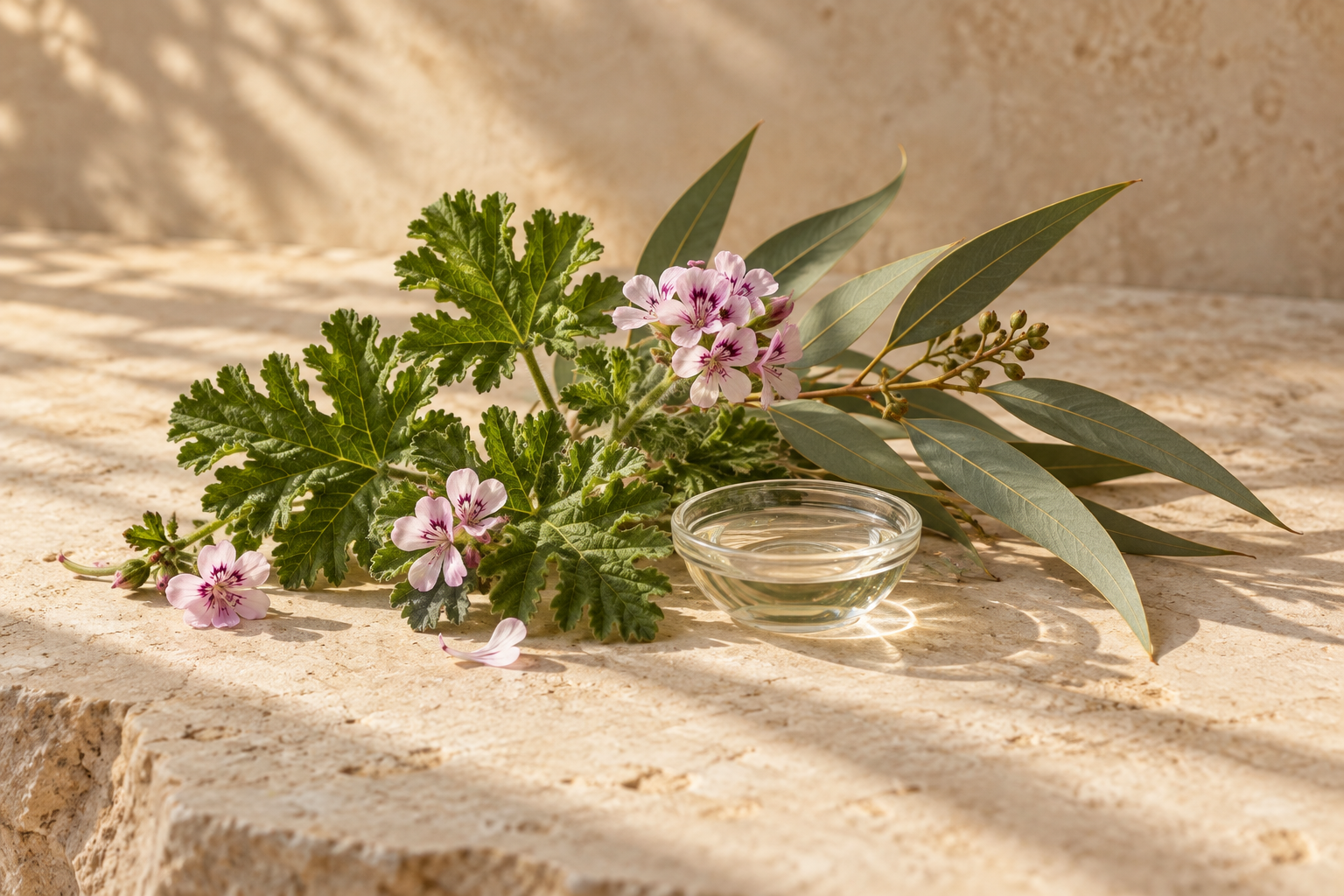
Rose-Scented Geranium
Rub its leaves gently between your fingers and something remarkable happens. A green leaf releases a fragrance unexpectedly reminiscent of rose.
Fresh. Floral. Green. Almost perfume-like.
And yet it isn’t a rose.
Rose-scented geranium belongs to the Pelargonium genus. Particular types have become important aromatic crops because of the essential oil contained within the plant.
Perfumers have long understood the value of natural aromatic materials. Our fragrance training describes naturals as contributing richness, complexity, radiance and vitality to fragrance compositions.
But fragrance is only one way of discovering the plant. Steam distillation reveals something else.
One distillation. Two expressions.
Place aromatic plant material into a steam-distillation process and volatile compounds travel with the steam.
The vapour cools. It condenses. And what emerges gives us two different botanical materials.
The essential oil
Small in quantity. Highly concentrated. Intensely aromatic.
A remarkable concentration of the plant’s volatile oil-soluble constituents.
And then there is the other expression.
The botanical distillate
Mostly water. Gently aromatic. Containing water-compatible volatile constituents carried through distillation. Sometimes called a hydrosol.
At Essentially Africa, we call ours a Botanical Distillate because we want people to understand it not simply as “water left over from making essential oil,” but as a botanical material worthy of being understood in its own right.
The two are related. But they are not the same product at different strengths. Their chemistry, aroma and appropriate applications can differ.
And that led us to an important idea.
Why separate them?
The essential-oil industry traditionally sells essential oil. The hydrosol market traditionally sells hydrosol. Sometimes a company sells both. Usually as two products.
We began wondering:
What if the better way to understand the botanical is to experience both?
Not as a bundle. Not simply as two products sold together. But as a Ritual.
The Essentially Africa Botanical Ritual
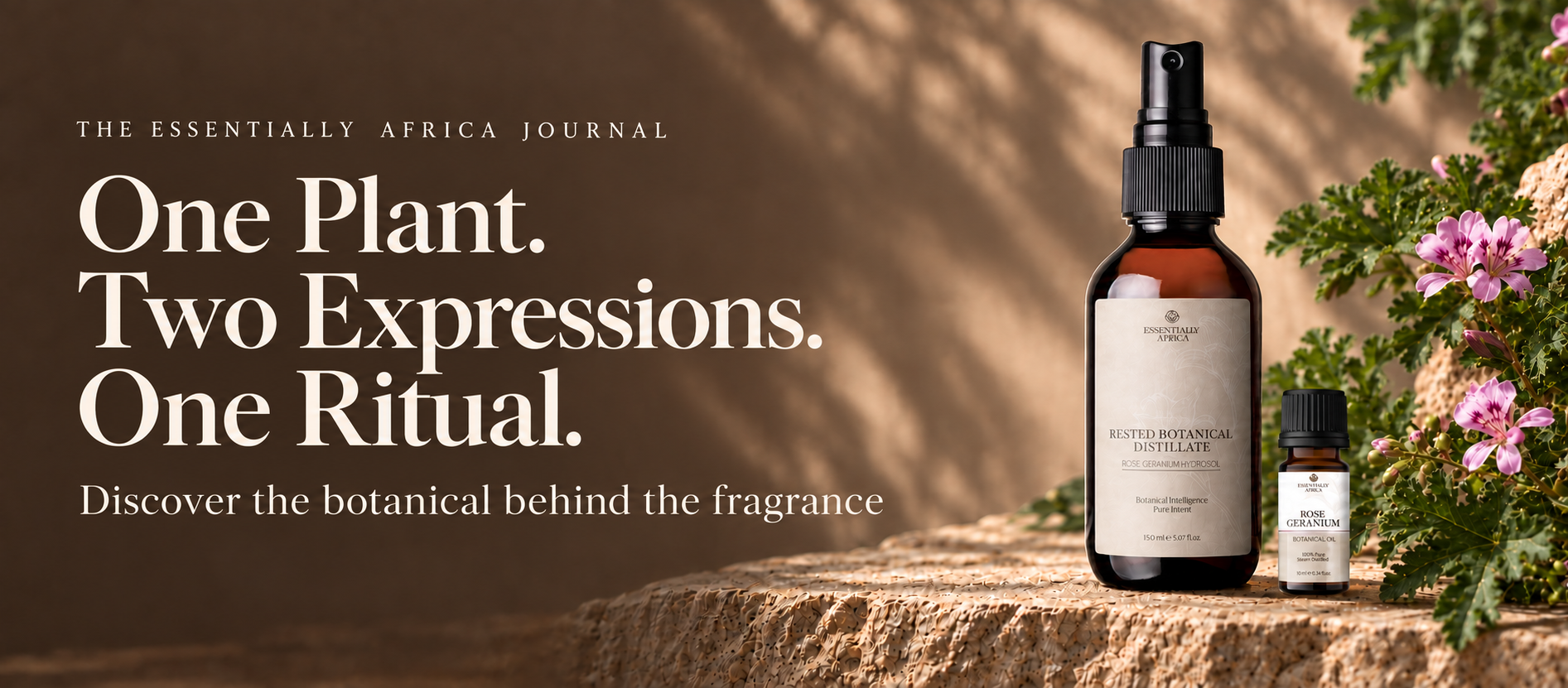
Our Rose Geranium Ritual begins with one plant and introduces two expressions of it.
Distillate
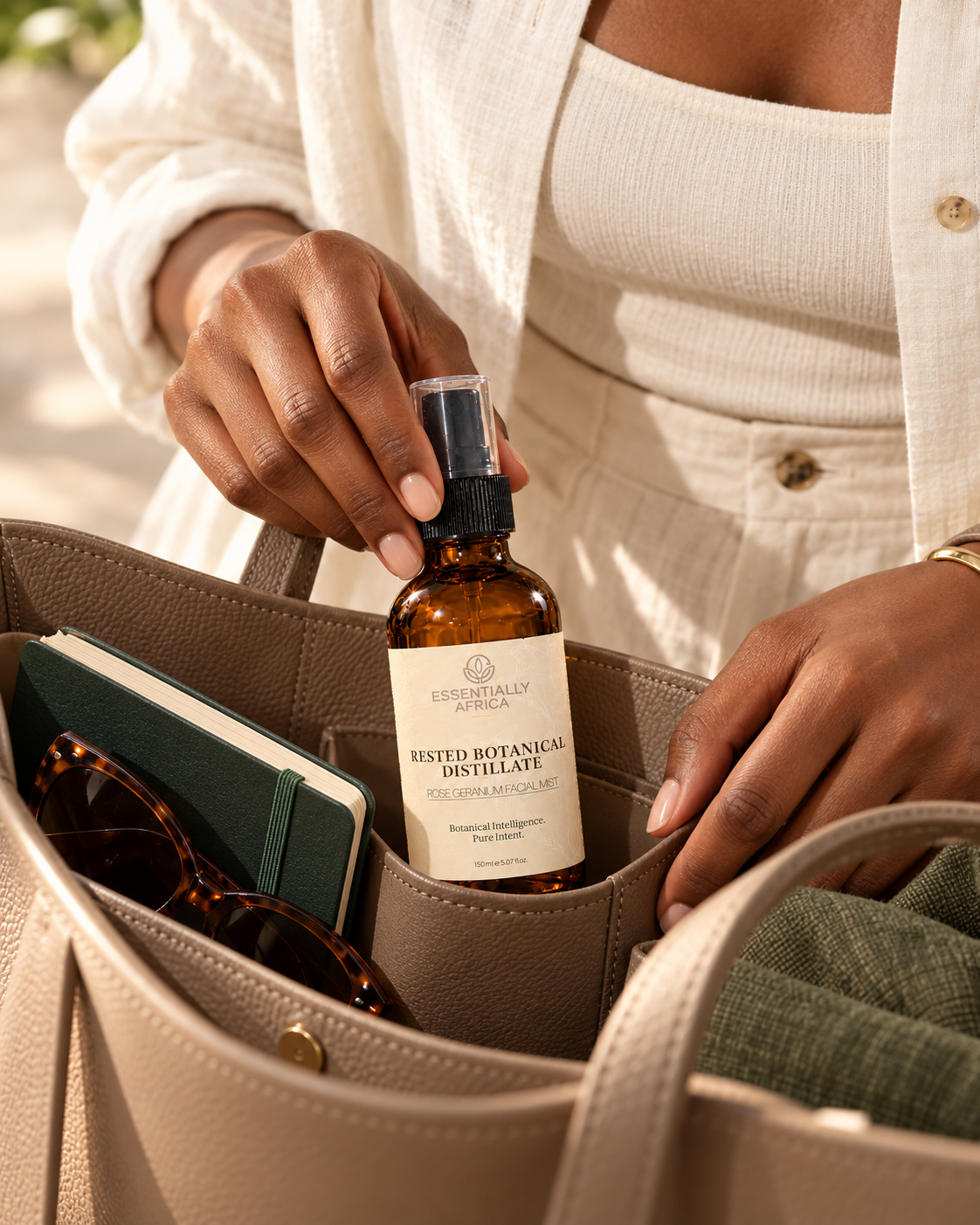
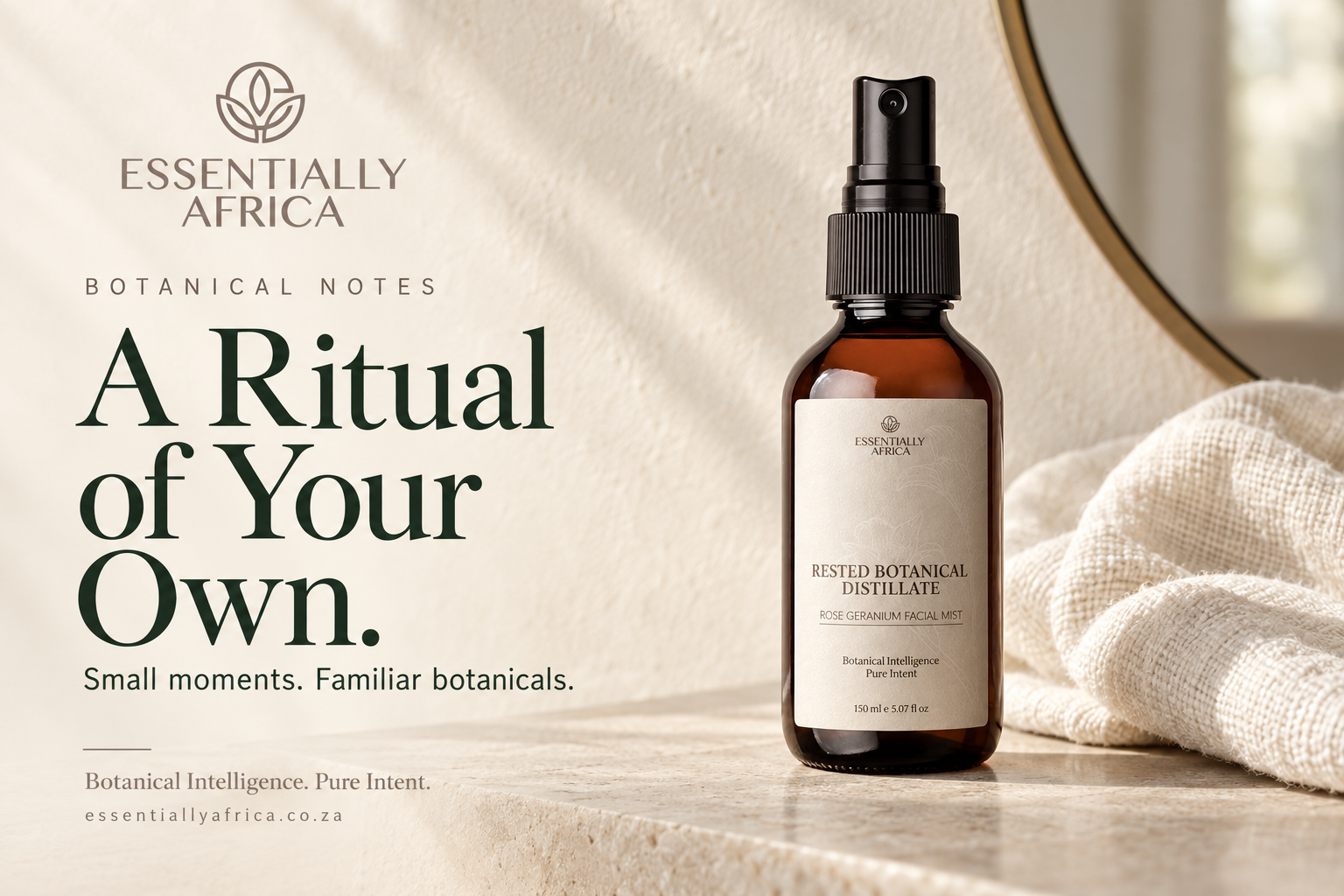
Begin gently. Mist. Experience the aroma. Feel the botanical on the skin. Live with it. Discover what you enjoy about it.
Essential oil
Then go deeper. Experience the concentrated aroma. Learn why essential oils require more considered use. Discover diffusion, appropriate dilution and other suitable rituals. Learn something about the chemistry behind the fragrance.
Suddenly, essential oils don’t have to feel complicated. The customer isn’t being introduced to twenty unfamiliar bottles. They are learning one plant.
And the plant becomes the teacher.
From product to Ritual
This distinction matters to us.
A product asks: What does this do?
A Ritual asks: How do I experience this botanical?
That allows us to move away from the idea that natural products must constantly promise bigger, faster or more dramatic results.
Sometimes the experience itself has value.
The fragrance. The mist. The bath. The atmosphere. The moment before sleep. The few seconds in the morning when you mist your face and breathe.
These small experiences reconnect the finished bottle to the living plant from which it came.
That is where Botanical Intelligence begins.
Four botanical worlds
As Essentially Africa grows, we don’t want to fill shelves simply because another botanical can be distilled. We want to explore different expressions of nature.
The flower
Rose · Rose Geranium · Lavender
Floral. Soft. Aromatic.
The green
Geranium · Leaves · Aromatic herbs
Fresh. Living. Herbaceous.
The forest
Eucalyptus · Pine
Fresh. Woody. Aromatic.
The earth
Vetiver · Roots · Resins
Deep. Earthy. Grounding.
Some of these botanicals are already familiar. Others are still being researched. And some may never become Essentially Africa products.
Because discovery also means knowing when not to make something.
And this is where WHE begins
Through the Wild Harvesting Exchange, we are exploring another question:
Can landscapes that require ecological management also reveal valuable botanical resources?
The process begins outside the beauty industry.
Identify. Understand. Harvest responsibly. Distil. Analyse. Test. Observe.
Only then do we ask:
Does this botanical belong in an Essentially Africa Ritual?
We will not assume that every essential oil deserves a skincare product. We will not assume that every distillate should become a facial mist. And we will not manufacture a story simply because we have harvested a plant.
The botanical must earn its place.
WHE Rituals
One day, this may give rise to a new chapter within Essentially Africa.
WHE Rituals
Botanicals discovered through landscapes, ecological management and responsible harvesting.
Perhaps Eucalyptus. Perhaps Pine. Perhaps Vetiver. Perhaps plants we have not yet discovered.
But each will follow the same principle:
Landscape
↓
Botanical
↓
Distillation
↓
Oil + Distillate
↓
Analysis
↓
Experience
↓
Ritual
Not every journey will reach the final step. And that is intentional.
Perhaps we don’t need more products
The beauty and wellness industries constantly introduce something new. A new formulation. A new ingredient. A new promise. A new trend.
We are interested in something older.
Plants that have existed quietly around us. Plants that perfumers have understood for generations. Plants growing in fields, forests and landscapes we pass every day.
Perhaps innovation doesn’t always mean adding something. Sometimes innovation begins by looking again. By asking better questions. By understanding what we already have. And by allowing nature to reveal what belongs.
One Plant. Two Expressions. One Ritual.
Botanical Intelligence. Pure Intent.
Discovered Beauty. Not Manufactured.
THE ESSENTIALLY AFRICA JOURNAL
Next: The Rose Geranium Ritual — discovering two expressions of one extraordinary botanical.
Fragrance reference: Fragrance Families and Trends (2015), EA’s fragrance training materials.